Canasta
Build 7-card melds and go out first.
Canasta originated in Montevideo, Uruguay and swept the world in the 1950s. Teams build melds of 7+ cards of the same rank (called "canastas") using wild cards freely. The game combines rummy-style building with partnership strategy.
🎮 Ways to Play Canasta
Create a Canasta Table
When Canasta launches, you'll create your own table in seconds, get an invite code, and deal in exactly who you want.
Join a Canasta Table by Invite
Joining will be as simple as entering a table code — one tap and you're seated at a friend's Canasta game.
Play Canasta Against the Computer
Smart AI opponents with multiple difficulty levels will make it easy to learn Canasta and practice your strategy solo.
Play Canasta Offline
Canasta will support offline play against computer opponents, so you can play anywhere — no internet connection needed.
🎯 Objective
First team to 5,000 points by completing canastas and going out.
🃏 Canasta Setup & Rules
- Uses 2 standard decks + 4 jokers (108 cards total).
- 2 to 4 players. At four they play as two partnerships sitting opposite each other. Deal 11 cards each.
- Flip one card to start the discard pile (the "pack"). If it's a wild card or red 3, keep flipping until a natural card appears.
▶ How to Play Canasta
- On your turn, draw 2 cards from the stock OR take the entire discard pile (if legal).
- Wild cards (Jokers + 2s) may substitute for any natural card in a meld.
- A meld is 3+ cards of the same rank. A canasta is a completed meld of 7+ cards.
- Natural (clean) canasta: 7 natural cards, no wilds = 500 pts. Mixed canasta: includes wild cards = 300 pts.
- Red 3s: place face-up immediately; score 100 pts each (or −100 if not a team canasta). Black 3s: block the discard pile.
- A player may go out (discard last card) only if their team has at least one canasta.
🎬 Watch: How to Play Canasta
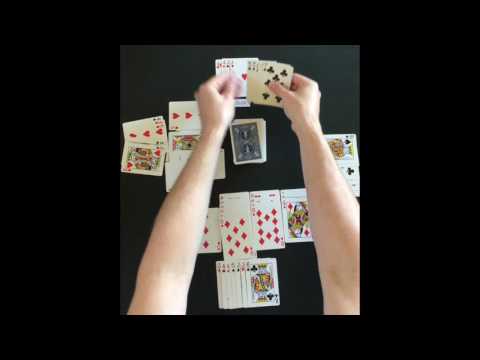
This video is embedded from YouTube and remains the intellectual property of its respective creator and/or rights holder. Vanikar LLC claims no ownership of, or rights in, the video content, and no affiliation with or endorsement by its creator is implied. The video is displayed via YouTube’s public embed feature in accordance with the YouTube Terms of Service and the agreements between YouTube and the content uploader.
📖 Detailed Guide
Setup and the deal
- Canasta uses two full decks plus four Jokers — 108 cards — and seats 2 to 4 players. At four, partners sit opposite each other and melds belong to the partnership.
- Each player is dealt 11 cards. One card starts the discard pile; if it is a wild card or a red 3, another is turned on top of it.
- Threes are never melded in the app’s baseline mode — they are simply discard fodder, so do not hold them hoping to build on them.
- On your turn you either draw two cards from the stock or take the entire discard pile, then meld if you wish, and finish by discarding one card.
Melding and wild cards
- A meld is three or more cards of the same rank laid face-up in front of your partnership. Suits are irrelevant — only rank matters.
- Jokers and 2s are wild and can stand in for any natural card, but a meld can never contain more wild cards than natural ones.
- A meld needs at least three cards, and it must contain at least two natural cards — so wilds can never outnumber the real cards in a meld.
- Melds belong to the partnership, not the player, so either partner can extend a meld the other one started.
Taking the discard pile
- Taking the pile is the big swing in Canasta — it can hand you a dozen cards at once, so most of the strategy is about earning the right to take it and denying it to opponents.
- To take it you must be able to use the top card immediately, either by matching it with two natural cards from your hand or by adding it to a meld your side already holds.
- Watch what opponents discard and what they take — the pile is the fastest way for either side to gain cards, so denying it matters as much as building your own melds.
- Jokers and 2s are wild and can stand in for any rank, but each one you spend is a card you cannot use to make a clean canasta later.
Canastas, going out, and scoring
- A canasta is a completed meld of seven or more cards. A natural canasta, with no wild cards, scores 500; a mixed one scores 300.
- Your partnership must have at least one canasta before either player may go out, so completing the first one is the real objective of the hand.
- Going out means playing or discarding your final card, which ends the hand immediately for everyone.
- Score card values on top of the bonuses: Jokers 50, 2s and Aces 20, Kings down to 8s 10 each, and 7s down to 4s 5 each. Cards still in hand count against you. First side to 5,000 wins.
📊 Canasta Scoring
Canasta totals: natural = 500, mixed = 300. Red 3s: 100 each (×2 if all four held). Each card has a point value. Going-out bonus = 100. First team to 5,000 pts wins.
❓ Canasta — Frequently Asked Questions
How many players do you need for Canasta?
Canasta is played with 2–4 players. On Vanikar, empty seats can be filled with AI opponents so you can always start a game.
When is Canasta coming to Vanikar?
Canasta is in development now. Premium subscribers get access first when it launches — download the app to be ready on day one.
Will I be able to play Canasta against the computer?
Yes. Like every Vanikar game, Canasta will support play against smart AI opponents with multiple difficulty levels, plus online multiplayer and private tables with friends.
Is Canasta free to play?
The Vanikar Card Games app is free to download on iOS and Android, and every game is free to play for 2 weeks — no credit card required.